
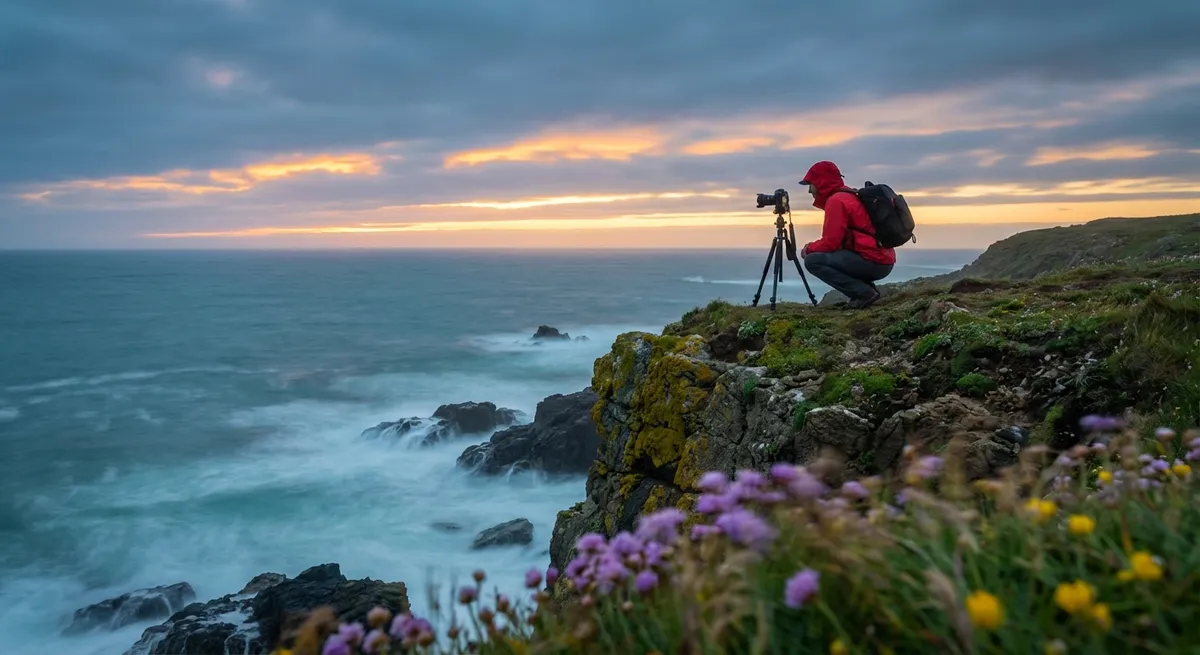
Landscape photography is the art of bottling a feeling—wind on your face, light on distant hills, the quiet hum of a wild place—and pouring it into a single frame. Whether you’re shooting with a phone or a full-frame beast of a camera, landscapes invite you to slow down, breathe, and really see the world. This guide will walk you through practical camera settings, essential techniques, and creative exercises designed to help you make images that feel as powerful as the scenes in front of you.
Start with the Light, Not the Lens
Before you touch your camera, look at the light. In landscape photography, light is your primary subject; everything else is supporting cast.
Early morning and late afternoon—golden hour—offer softer, directional light that sculpts mountains, trees, and clouds with gentle contrast. Midday sun tends to flatten the scene, but it can still be powerful for dramatic black-and-white shots, harsh desert scenes, or strong graphic compositions.
Try this simple approach:
- Golden hour strategy
- ISO: 100–200
- Aperture: f/8–f/11 for front-to-back sharpness
- Shutter speed: Let it float in Aperture Priority; use exposure compensation (±0.3–1 stop) to fine-tune
- White balance: Daylight or Cloudy for warmer tones
- Overcast or foggy days
- Perfect for moody forests, waterfalls, and minimalist seascapes.
- ISO: 100–400
- Aperture: f/8–f/16
- Shutter speed: May slow down; use a tripod if it drops below 1/60s
Train yourself to ask: Where is the light coming from? How is it falling on the landscape? What mood does it create? Your answer to those questions matters more than your gear.
Rock-Solid Foundations: Sharpness, Stability, and Focus
Soft horizons and wobbly trees are beautiful in a painting, less so in an unintended blurred photograph. Sharp landscapes begin well before you press the shutter.
Essential stability toolkit
- Tripod: Use one whenever possible, especially in low light or long exposures.
- Remote or self-timer: Set a 2-second timer to avoid camera shake from pressing the shutter.
- Image stabilization (IS/IBIS):
- Handheld: Turn it on.
- On a tripod: Turn it off (on many cameras it can actually introduce blur).
Focus like a landscape pro
- Use single-point autofocus and place it about one-third into the scene for deep focus (the “hyperfocal-ish” approach).
- For most scenes:
- Focus mode: AF-S / One Shot
- Aperture: f/8–f/11
- For very deep scenes (near foreground + distant mountains):
- Consider focus stacking:
- Focus on the close foreground and shoot.
- Focus mid-scene and shoot.
- Focus on the distant background and shoot.
- Blend in post-processing (Lightroom, Photoshop, or other editors that support focus stacking).
Sharpen your craft exercise
Find a scene with good depth—rocks or flowers in the foreground, mountains in the distance.
Shoot three versions:
- Handheld, no tripod, wide open (e.g., f/3.5–f/4).
- Tripod, f/8, careful focus, 2-second timer.
- Tripod, f/11, focus-stacked (foreground, mid, background).
Zoom in on your shots at home and compare. This side-by-side will teach you more about sharpness than a week of reading.
Dial In the Landscape: Practical Camera Settings
Think of camera settings as a creative toolkit rather than rigid rules. Here are battle-tested starting points you can adapt to your style and gear.
Classic “Everything Sharp” Landscape
- Mode: Aperture Priority (A/Av)
- ISO: 100–200
- Aperture: f/8–f/11
- Metering: Evaluative/Matrix
- Exposure compensation: Start at 0, adjust ±0.3–1 stop based on your histogram
- Focus: Single point, one-third into the frame
Use this for wide vistas, sweeping cliffs, and scenes where you want clarity from front to back.
Long-Exposure Water and Clouds
To get silky water and streaking clouds, you need a slow shutter speed.
- Mode: Manual or Shutter Priority (S/Tv)
- ISO: 100
- Shutter speed:
- Water: 1/4s–2s for gentle blur; 5–30s for dreamy silk
- Clouds: 15–60s or longer
- Aperture: f/8–f/16
- Tripod: Essential
- Neutral Density (ND) filter: Strongly recommended for daytime long exposures
Experiment: Start at 1/4s and increase time until the water texture feels right; “right” is a creative decision.
Minimalist Phone Settings (If You’re Shooting Mobile)
If you’re working with a smartphone:
- Turn on grid lines for better composition.
- Tap to focus, then slide exposure up/down to avoid blown-out skies.
- Use HDR mode for high-contrast scenes (bright sky + dark foreground).
- Use a phone tripod or lean against something solid for low-light shots.
Composing Depth: From Flat Snapshot to Immersive Scene
The landscape is three-dimensional; your photo is not. Composition is how you create the illusion of depth and draw the viewer into the frame.
Build your image in three layers
- Foreground: Something close and interesting—rocks, grasses, a winding stream, a flower, textures on the ground.
- Midground: Trees, hills, lakes, or buildings that lead the eye further in.
- Background: Mountains, horizon, sky, or distant lights.
Ask yourself: What’s my foreground character? What’s my backdrop? Without a strong foreground, many landscapes feel flat.
Simple composition techniques
- Leading lines: Use roads, rivers, fences, shorelines, or shadows to guide the viewer into the image.
- Rule of thirds: Place the horizon on the top or bottom third, not in the exact middle (unless you’re going for symmetry).
- Framing: Use overhanging branches, rock arches, or doorways to frame your scene.
- Negative space: A big open sky or empty snowfield can give your images breathing room and emotional impact.
Depth-building exercise
Return to a favorite location three times and, each time, force yourself to build a new composition that clearly shows foreground, midground, and background. Don’t leave until all three layers feel intentional.
Harness the Sky: Managing Dynamic Range
One of the toughest technical challenges in landscape photography is dealing with bright skies and darker land. Cameras don’t see the same range of light that your eyes do—at least not in a single exposure.
Three ways to tame that contrast
Expose for the highlights
- In high-contrast scenes, err on the side of protecting the bright parts (the sky, reflections). - Use your histogram: make sure it doesn’t slam against the right edge. - You can lift shadows later in editing; blown-out skies usually can’t be saved.
Use a graduated ND filter (GND)
- Darkens the sky while leaving the foreground relatively untouched. - Ideal for seascapes, mountains, and scenes with a fairly straight horizon.
Bracket your exposures
- Enable auto exposure bracketing (AEB): e.g., -2 / 0 / +2 EV. - In post-processing, blend them to create a balanced exposure (manually or with HDR tools).
Quick HDR-style field workflow
- Tripod on, composition set.
- Turn on AEB, shoot a burst of 3–5 exposures.
- Make sure your shadows and highlights are both captured in at least one frame.
- Blend later in Lightroom/Photoshop or mobile apps that support HDR merging.
Color, Mood, and the Art of Waiting
The difference between a “nice” photo and a memorable one is often measured in patience.
- Arrive early, stay late: Aim to be on location at least 30–60 minutes before sunrise or sunset. Some of the best light happens before the sun appears or after it’s gone.
- Watch the clouds:
- High, wispy clouds catch intense color.
- Low, heavy clouds create drama and mood.
- Gaps near the horizon can burst into fiery skies at sunrise/sunset.
White balance as a creative brush
- Daylight/Cloudy: Natural, slightly warm—great for landscapes.
- Shade: Warmer; lovely for forest scenes.
- Custom/Manual: Use a cooler white balance for blue, moody scenes (snow, twilight, fog), warmer for cozy sunsets.
Try shooting RAW so you can adjust white balance after the fact without degrading image quality.
Creative Exercises to Train Your Eye
Treat these like mini-assignments—perfect for a weekend or an evening walk. They’ll make you see differently and shoot more intentionally.
1. The 10-Meter Challenge
Pick a random spot. You may not move more than 10 meters in any direction.
- Create 5 completely different compositions.
- Vary:
- Focal length (wide vs. zoomed in)
- Orientation (vertical vs. horizontal)
- Foreground focus vs. background focus
- High vs. low vantage point (try kneeling or standing on a rock)
This trains you to mine a single location for multiple stories.
2. One Landscape, Three Moods
Visit the same scene (a lake, overlook, or field) on:
- A sunny, clear day
- An overcast or rainy day
- During golden hour or blue hour
Photograph the same composition each time.
Later, compare:
- How does light change color and contrast?
- What feels calm, dramatic, or mysterious?
- How might you edit each image to lean into its mood?
3. Focus on Foreground Stories
For one outing, make the foreground your hero.
- Get low—really low. Camera near ground level.
- Choose detailed subjects: cracked earth, seaweed, pebbles, flowers, driftwood.
- Use wide-angle (10–24mm APS-C, 16–35mm full-frame) and move in close.
You’ll discover that most people ignore what’s right at their feet—this is your opportunity to stand out.
Editing with Intention, Not Just Intensity
Post-processing is where your technical capture becomes your artistic statement. The goal: enhance what you experienced, not fabricate something that breaks the mood.
A simple editing workflow
Global adjustments
- Adjust exposure, contrast, and white balance first. - Tweak highlights down to recover sky detail; lift shadows gently.
Presence and tone
- Use clarity and texture modestly; overdoing them can make rocks and trees look unnatural. - Use dehaze to cut through atmospheric haze or fog—but be gentle.
Local adjustments
- Apply a graduated filter to darken and add contrast to the sky. - Use a radial filter or mask to subtly brighten your main subject or foreground.
Color grading
- Warm highlights, cool shadows for cinematic depth. - Keep an eye on skin tones and natural elements (grass, sky) so they don’t turn radioactive.
Always zoom out and ask: Does this feel like the place I stood in, just seen more clearly?
Keep Going: Build a Landscape Habit
Landscape photography rewards repetition. The more often you return to places in different weather, seasons, and light, the deeper your work becomes.
To keep momentum:
- Create a simple shot list: “Foggy forest,” “Storm over water,” “Backlit grasses,” “Minimalist snow.”
- Scout with your phone: Take quick reference photos and notes for future visits when the light is better.
- Join a local or online community: Share images, ask for critique, and learn from how others interpret the same scenes.
- Print your favorites: A landscape doesn’t truly feel finished until you’ve seen it on paper.
Every time you step outside with a camera, you are training yourself to notice: the shift in color as the sun dips, the subtle curve of a shoreline, how clouds mirror mountains. That act of attention is a creative practice all its own.
Conclusion
Landscape photography is less about owning the best gear and more about learning to listen—to light, to weather, to the quiet conversation between land and sky. With thoughtful camera settings, solid technique, and regular creative exercises, you can turn ordinary scenes into images that carry emotion, depth, and story.
Keep chasing horizons, but don’t forget to look down at the wildflowers by your feet, the lines in the rock, the reflection in a puddle. Often, the most powerful landscapes happen when you stop trying to capture everything and decide, with intention: This is the story I want to tell.
Sources
- [National Park Service – Nature & Science: Landscapes](https://www.nps.gov/subjects/nature/index.htm) – Background on natural landscapes, geology, and ecosystems that can deepen your understanding of the scenes you photograph
- [Nikon Learn & Explore – Landscape Photography Tips](https://www.nikonusa.com/en/learn-and-explore/a/tips-and-techniques/landscape-photography-tips.html) – Practical guidance on camera settings, composition, and using lenses for landscapes
- [Canon Europe – Long Exposure Landscape Guide](https://www.canon-europe.com/get-inspired/tips-and-techniques/landscape-long-exposure-photography/) – Detailed advice on achieving long exposures for water and clouds, including ND filter use
- [Harvard Digital Photography Course Materials](https://cs50.harvard.edu/x/2020/tracks/ap/photography/) – Foundational camera and exposure concepts that apply directly to landscape work
- [BBC – The Science of Sunrises and Sunsets](https://www.bbc.com/future/article/20190110-the-science-of-beautiful-sunrises-and-sunsets) – Explains why golden hour light looks the way it does, helping you anticipate and plan for dramatic skies