
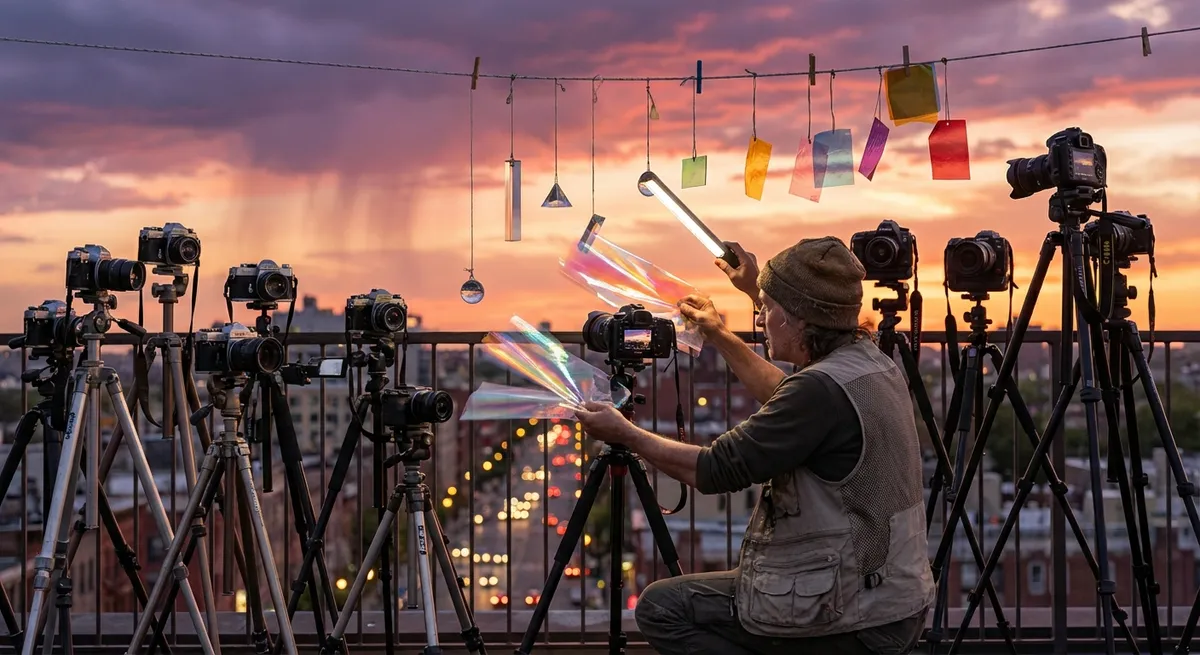
The right camera gear is not about owning the most expensive kit—it’s about knowing how to make whatever you have feel like an extension of your eye and your imagination. Whether you’re shooting with a mirrorless powerhouse, a trusty DSLR, or the phone in your pocket, you can shape light, freeze emotion, and tell stories that resonate. This guide blends practical settings, technique breakdowns, and creative exercises so your gear stops feeling “complicated” and starts feeling like a passport to better images.
Start With the Story, Not the Specs
Before you twist a dial or swap a lens, pause and ask: What am I trying to say with this photograph? Is it about stillness or motion, intimacy or scale, grit or softness? Gear is simply a set of tools to reinforce those choices.
If you want your viewer to feel close to your subject, you might reach for a fast prime lens and shoot with a shallow depth of field. If your goal is to show the energy of a city street, you’ll lean on a wider lens, a faster shutter, and perhaps some intentional blur. Even your choice of camera body—lightweight and discreet vs. rugged and gripped—affects how and where you’re willing to shoot.
Making the story your starting point cuts through the overwhelm of specs. Instead of asking, “Is f/1.8 better than f/2.8?” you ask, “Do I want more separation between subject and background?” Settings stop being numbers and become visual decisions that support your narrative.
Build a Thoughtful Kit: Essentials That Pull Their Weight
A powerful kit doesn’t need to be huge; it needs to be intentional. Think of each piece of gear as a character in your creative cast.
1. Camera body: Choose responsiveness over prestige.
Look for solid autofocus, good low‑light performance, and ergonomics that feel good in your hands. A camera you’re comfortable carrying all day will always beat a “pro” body you leave at home.
2. Lenses: Build around three core perspectives.
- Wide (16–35mm range on full-frame / 10–24mm APS‑C):
- Standard (35–50mm):
- Telephoto (70–200mm or 85–135mm primes):
Perfect for landscapes, architecture, environmental portraits, and storytelling scenes.
Close to how we see with our eyes; great for street and everyday life.
Ideal for portraits, compressed landscapes, and isolating details.
3. Tripod & support:
A sturdy, lightweight tripod unlocks long exposures, astrophotography, and precise compositions. A mini tabletop tripod or clamp can be a game-changer for travel and self-portraits.
4. Light control: Filters & modifiers.
- Polarizing filter: Deepens skies, tames reflections, enriches color.
- ND (neutral density) filter: Lets you use slow shutter speeds in bright light for silky water and motion trails.
- Small reflector or collapsible diffuser: Helps shape natural light on faces without bulky gear.
5. Audio & extras (for hybrid shooters):
If you mix photo and video, a compact shotgun mic, extra batteries, and high-speed memory cards are worth their weight in gold.
The goal: every item should have a clear job. If a piece of kit doesn’t have a purpose in your shooting style, it’s dead weight.
Master the Exposure Triangle: Paint With Light on Purpose
Exposure is your camera’s language for brightness and mood. Once you’re comfortable with aperture, shutter speed, and ISO, you can deliberately bend reality to fit your vision.
Aperture (f-stop): Depth of field & mood
- Wide aperture (f/1.4–f/2.8):
- Mid-range (f/4–f/8):
- Narrow (f/11–f/16+):
Shallow depth of field, creamy backgrounds, subject isolation. Great for portraits, detail shots, and low light.
Balanced sharpness and background context. Ideal for street, documentary, and travel.
Deep focus from foreground to background. Ideal for landscapes and architecture.
Shutter Speed: Motion & energy
- Fast (1/1000s and above):
- Moderate (1/60–1/250s):
- Slow (1/10s and below):
Freeze sports, wildlife, and fast action.
Everyday handheld shooting. Good balance between sharpness and light.
Introduces blur and motion trails—best used on a tripod or with deliberate motion effects.
ISO: Sensitivity & texture
- Low (ISO 100–200):
- Medium (ISO 400–1600):
- High (ISO 3200+):
Clean, detailed, minimal noise. Perfect for bright conditions and controlled light.
Great for indoor, evening, or shaded scenes where you need faster shutter speeds.
For very low light or fast action; expect more grain, which can be used creatively for mood.
Creative exercise: Exposure triad drill
- Find a simple subject (a cup near a window, a potted plant, a person).
Set your camera to Aperture Priority (A/Av) and take three shots:
- f/2.8, f/5.6, f/11 (or closest equivalents your lens allows).
Then switch to Shutter Priority (S/Tv) and again take three:
- 1/30s, 1/125s, 1/500s.
Zoom in and study: How does the background blur change? Where does motion blur start to appear? What does the noise look like as ISO shifts?
This simple drill makes exposure feel tangible, not theoretical.
Focus Like a Pro: From Missed Shots to Razor Clarity
Nailing focus is one of the fastest ways to make your images look instantly more polished. It’s also where camera gear—especially lenses and autofocus systems—can make a dramatic difference when you know how to harness them.
1. Use the right autofocus mode
- Single AF (AF‑S / One‑Shot):
- Continuous AF (AF‑C / AI Servo):
- Eye/Face detection:
Ideal for still subjects like landscapes, posed portraits, and products.
For moving subjects—kids, pets, sports, candids.
Hugely helpful for portraits; let the camera track the eye while you focus on expression.
2. Choose a smaller focus area
Instead of wide-area or full‑screen focusing, use a single point or small focus zone. Place it deliberately on the subject’s eye (closest to the camera), critical detail, or key area of interest.
3. Use back-button focus (if available)
Assign autofocus to a rear button so your shutter only takes photos. This gives you:
- More control over when focus changes
- Easier tracking of subjects
- Faster recomposing without losing focus
Creative exercise: Moving subject challenge
- Ask a friend to walk toward you at a natural pace.
Set your camera to:
- AF‑C / AI Servo - Continuous shooting mode - Shutter speed around 1/500s 3. Pan slightly with them and fire short bursts as they approach. 4. Review the sequence: How well did your camera track? Adjust focus area size and try again.
This builds both your muscle memory and your confidence in your camera’s AF system.
Light Is Your True Lens: See It, Shape It, Bend It
Gear captures light; your eye interprets it. The more fluently you read light, the more intentional your images become—no matter the camera in your hands.
1. Understand light direction
- Front light: Flattering, low-contrast, minimizes texture and wrinkles—but can feel flat.
- Side light: Adds depth, drama, and texture. Great for portraits and still life.
- Back light: Creates silhouettes, halos, and dreamy atmospheres when controlled.
2. Soften harsh light
Midday sun is unforgiving. Use:
- Open shade (under awnings, trees, building shadows)
- A simple diffuser (thin white curtain, translucent umbrella, or purpose-built disc)
- Bounce light with a white wall, reflector, or even a poster board
3. Color temperature (white balance)
- Warm light: Sunrise/sunset, tungsten bulbs—adds coziness and emotion.
- Cool light: Shade, overcast, some LEDs—feels calm, distant, or moody.
Experiment with white balance presets (Daylight, Shade, Tungsten) or shoot RAW to fine-tune later. You’re not just “correcting” color—you’re choosing a feeling.
Creative exercise: One room, three lights
Pick a room and photograph the same subject three times:
- Using only window light (turn off indoor bulbs).
- Using only indoor bulbs (close curtains).
- Mixing both sources.
Compare color, shadows, and mood. Notice which setup supports what kind of story.
Practical Camera Settings for Popular Scenarios
Use these as starting points, then tweak based on your gear and taste.
1. Portraits (outdoors, natural light)
- Mode: Aperture Priority (A/Av)
- Aperture: f/1.8–f/3.5 (for one person), f/4–f/5.6 (for groups)
- ISO: 100–400 in daylight; 400–1600 in shade/evening
- Focus: Single point on the nearest eye; AF‑S / One‑Shot or Eye AF
- Tip: Position your subject with their back to the sun and use a reflector or bright surface to bounce light into their face.
2. Street & everyday life
- Mode: Shutter Priority (S/Tv) or Manual
- Shutter speed: 1/250s–1/500s to freeze casual motion
- Aperture: f/4–f/8 for more in-focus scenes
- ISO: Auto, with a max cap you’re comfortable with (e.g., 3200)
- Focus: AF‑C / AI Servo, small zone in the middle
- Tip: Pre‑focus at a common distance (zone focusing) so you can raise, frame, and shoot instantly.
3. Landscape & travel vistas
- Mode: Aperture Priority
- Aperture: f/8–f/11 for sharpness front-to-back
- ISO: 100–200
- Shutter speed: Let the camera choose; use a tripod if it falls below 1/60s
- Focus: Single point about one-third into the scene (hyperfocal-ish approach)
- Tip: Use a 2‑second timer or remote release to avoid camera shake on a tripod.
4. Low light & night scenes
- Mode: Manual or Shutter Priority
- Aperture: widest your lens allows (f/1.4–f/2.8 if possible)
- Shutter speed: 1/60s handheld; slower on tripod
- ISO: 1600–6400, depending on your camera
- Focus: Manual focus or single AF, using live view zoom if needed
- Tip: Embrace some noise; think of it as digital grain that can enhance mood.
Creative Exercises to Level Up Your Eye (Using Any Gear)
These exercises are designed to stretch your vision more than your wallet. You can do them with a pro body, a point‑and‑shoot, or your phone.
1. The One-Lens, One-Week Challenge
Pick one focal length (a 35mm or 50mm prime is ideal, or lock your zoom at one point) and shoot exclusively with it for a week.
- You learn how that field of view “sees.”
- You move your body more instead of twisting the zoom ring.
- You start recognizing compositions faster.
Limitations here are creative rocket fuel.
2. Monochrome Mindset
Set your camera to shoot black and white previews (but record RAW or color JPEGs if possible). Spend a day or two shooting only this way.
- Focus on light, shadow, lines, and contrast.
- Ignore color and watch how your compositions become stronger.
- Later, compare the monochrome and color versions and ask which better supports the story.
3. 36 Frames Like Film
Pretend your memory card is a single roll of 36 exposures.
- Reset your frame count and give yourself a theme (e.g., “hands,” “reflections,” “quiet corners”).
- You only get 36 frames for the whole outing.
- Each press of the shutter should be deliberate—compose, check edges, watch the background.
You’ll be surprised how much more intentional your photography becomes when each click “matters.”
4. The Light-Hunt Walk
Go on a 30–60 minute walk with one goal: photograph interesting light.
- Ignore “subjects” like monuments or people at first.
- Look for shafts of light, patterns of shadow, reflections in windows, backlit leaves.
- Capture how light transforms ordinary objects.
Do this regularly, and you’ll start seeing photographable moments everywhere.
Conclusion
Your camera gear doesn’t have to be perfect; it just has to be understood. Once you know what each piece is good at—and how aperture, shutter speed, ISO, focus, and light all shape a story—you can create powerful images with almost anything. The world doesn’t need more technically flawless but forgettable photos. It needs your point of view, your curiosity, your way of noticing.
Treat every lens as a different voice, every setting as a deliberate brushstroke, and every outing as a small workshop with yourself. Be patient, be playful, and let the process be as beautiful as the pictures. Your most important gear will always be the eye that looks through the viewfinder and the mind that imagines what could be.
Sources
- [Nikon Learn & Explore – Understanding Exposure](https://www.nikonusa.com/en/learn-and-explore/a/tips-and-techniques/understanding-exposure.html) - Clear breakdown of aperture, shutter speed, and ISO with visual examples
- [Canon USA – Basic Camera Settings for Beginners](https://www.usa.canon.com/support/photography-essentials/basics/camera-settings) - Practical guidance on modes, focus, and how to approach different scenes
- [B&H Explora – Choosing the Right Lens](https://www.bhphotovideo.com/explora/photography/buying-guide/choosing-right-lens) - Detailed look at focal lengths, lens types, and how they affect your images
- [Harvard Digital Photography Course Materials](https://cs50.harvard.edu/x/2020/tracks/digital_photography/) - Educational resources on composition, light, and technical fundamentals
- [National Park Service – Night Sky Photography Tips](https://www.nps.gov/subjects/nightskies/astrophotography-tips.htm) - Practical settings and techniques for low-light and night sky photography