
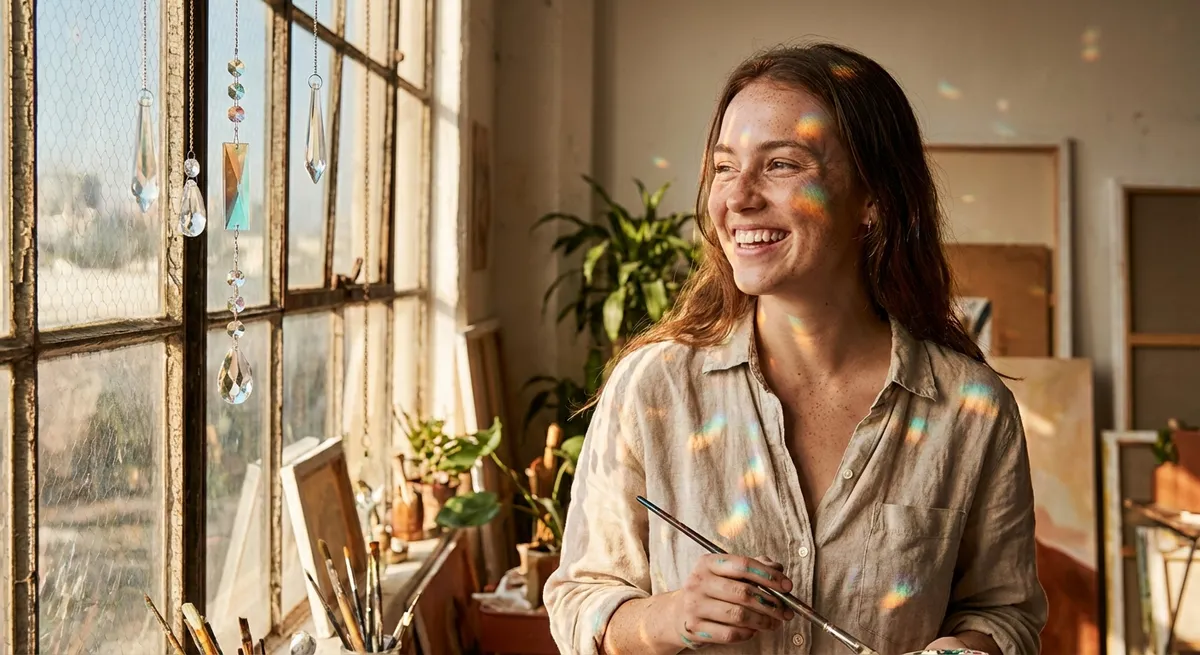
Some portraits look like memories; others look like movie stills. The difference is almost never just the camera—it’s the way you shape light around a face. Portrait lighting isn’t reserved for studios, expensive strobes, or mysterious “pros.” It’s something you can practice in your living room, by a window, with a single lamp and a curious friend.
This guide will walk you through the essentials of portrait lighting—settings, setups, and small creative experiments—so you can turn everyday light into something that feels intentional, emotional, and unmistakably yours.
Start With the Light You Already Have
Before you think about flashes or softboxes, train your eye on the light that’s already there. Great portrait lighting usually starts with noticing.
Look for three things: direction, quality, and color.
- Direction: Where is the light coming from? Front, side, or behind your subject? A big window to one side will carve gentle shadows; overhead lights can create harsh eye sockets; light behind your subject can give you a dreamy halo.
- Quality: Is it hard (sharp shadows) or soft (gentle, wrapping shadows)? Cloudy days, sheer curtains, and light bouncing off white walls are your allies for soft, flattering skin.
- Color: Are you mixing warm tungsten lamps with cool daylight? That can cause odd skin tones. Try sticking to one dominant light source, or adjust your white balance accordingly.
Practical starting settings (for natural light portraits):
- Mode: Aperture Priority (A/Av) for flexibility
- Aperture: f/1.8–f/2.8 (for creamy background) or f/4–f/5.6 (for more in focus)
- ISO: 100–400 outdoors; 400–1600 indoors, depending on light
- Shutter speed: Aim for 1/125s or faster (1/250s+ if your subject moves)
- White balance: “Daylight” for consistent look, or “Auto” if you plan to edit
Creative exercise:
Pick a single room and photograph the same person in four different spots: beside a window, facing a lamp, in the doorway, and near a white wall. Don’t change your subject’s pose—only move where they stand. Notice how their face changes as the light moves. Save your favorite lighting spot as your new “go-to” portrait corner.
Sculpt With Shadows, Not Just Light
Flattering portrait lighting is less about blasting a face with brightness and more about deciding where shadows should live. Shadows carve cheekbones, define noses, and hint at mood.
Some classic approaches you can adapt even without a studio:
- Open shade: Place your subject just inside the shadow (under an archway, canopy, or building overhang) while they face the open sky. This gives gorgeous, even light with natural catchlights in the eyes.
- Window side-light: Have your subject stand at 45° to a window. One side of their face is gently brighter, the other carries a soft fade into shadow. Move them closer or farther to control contrast.
- DIY “loop light”: Turn your subject slightly so the light hits them at about 30–45° from the front. Look for a small shadow under and slightly to the side of the nose—this is a classic loop pattern that flatters most faces.
Practical settings for controlled shadows (indoors, window light):
- Mode: Manual (M), for consistent exposure
- Aperture: f/2–f/4 for shallow depth of field
- Shutter speed: 1/160–1/250s
- ISO: 400–800
- Metering: Spot or center-weighted, metering on the lit side of the face
Creative exercise:
Ask a friend to stand by a window. Rotate them slowly in place and fire a frame every quarter-turn. Watch how the nose shadow changes shape with each angle. Choose the rotation where the face feels most like “them”—that’s likely a lighting angle you’ll use again and again.
Make a Single Light Look Cinematic
You don’t need a full studio setup to create drama. One light source, placed thoughtfully, can feel like a still from a film.
You can use:
- A speedlight bounced off a wall or ceiling
- A constant LED panel with a softbox
- Even a shaded desk lamp pointed at a white poster board to bounce
Simple cinematic setup: “One Light + Reflector”
- Place your subject about 1–2 meters from a plain background.
- Put your light source at a 45° angle to your subject, slightly above eye level, angled down.
- On the opposite side, hold a reflector (or a large white foam board) close to bounce back gentle fill.
- Pull the reflector closer for softer, brighter shadows; pull it away for more drama.
Starting settings for a flash-based portrait:
- Mode: Manual
- Aperture: f/5.6–f/8 (for crisp details)
- Shutter speed: 1/160–1/200s (below your camera’s sync speed)
- ISO: 100–200
- Flash power: Start around 1/16 or 1/32 power and adjust until skin looks balanced
Creative exercise:
Shoot three versions of the same portrait:
- Version 1: Light and reflector very close (soft, commercial look)
- Version 2: Reflector moved away (more contrast, sculpted)
- Version 3: No reflector at all (bold, moody)
Put them side by side. Notice how just one decision—whether to fill the shadows—changes the entire emotional tone.
Use Background and Color to Shape the Mood
Light on the face is only half the story. Where that face exists—and the color temperatures you blend—can take a portrait from “nice” to “this feels like a scene.”
Background choices that amplify your light:
- Bright, neutral walls: These act as giant soft reflectors, evening out the light and lifting shadows under the eyes.
- Dark backdrops: They help your subject pop and make the light feel more dramatic, especially if the background is a stop or two darker than the face.
- Textured environments: Brick, plants, curtains, and art can catch light in interesting ways—but keep them less bright than the face.
Color temperature as a creative tool:
- Daylight (around 5500K) usually feels clean and natural.
- Tungsten lamps (around 2700–3200K) feel warmer and more intimate.
- Mixing a cool window light with a warm lamp in the background can create cinematic depth—cool subject, warm bokeh behind.
Practical settings tip:
- If you want clean skin tones, choose “Daylight” or manually set 5000–5500K and avoid mixed white balance.
- If you want a warmer, storytelling feel, set white balance slightly cooler (e.g., 4500K) and let tungsten in the background glow extra warm.
Creative exercise:
Stage a simple portrait near a window at dusk. Keep your subject lit mainly by the cool blue window light, but turn on a warm lamp behind them. Take a set at:
- Auto white balance
- Daylight white balance
- Tungsten white balance
Compare how the same scene shifts in emotion. Decide which version feels most like the story you want to tell.
Direct With Light, Not Just Words
Great portrait photographers don’t only tell people where to look; they use light to guide the viewer’s eye. You can use lighting as a subtle form of direction.
Think about:
- Catchlights: That sparkle in the eyes makes your subject feel alive. Always check your frame for a tiny reflection of your light source. If you don’t see it, adjust angle or ask your subject to turn their eyes slightly toward the light.
- Brightest area wins: Our eyes go first to the brightest part of the image. Make sure the face is the brightest, not the background or clothing.
- Contrast as attention: High contrast around the eyes and face draws focus. Lower contrast around the edges lets them fade gently into supporting roles.
Practical settings for eye-sharp portraits:
- Autofocus mode: Single-point AF
- AF point: Place on the eye closest to camera
- Aperture: f/2–f/3.2 for shallow depth with a bit of forgiveness
- Shutter speed: 1/200–1/400s to counter tiny movements
- Drive mode: Continuous/burst for micro-expressions
Creative exercise:
Do a “catchlight hunt.” Photograph someone in three locations: facing a big window, under a porch or awning, and just inside a doorway. Zoom in on the eyes in each shot and see how the catchlights change shape (rectangles, circles, multiple little points). Start choosing positions based on which catchlight style you like best.
Build Your Own Portrait Lighting Ritual
The more you practice, the less you’ll scramble with settings and the more you’ll pay attention to your subject. A simple workflow ritual can quiet the technical noise so you can connect.
Here’s a quick portrait ritual you can adapt:
Location scan (30 seconds)
Walk the area, look at your own hand in different spots, and find the softest, most flattering light.
Test frame (15 seconds)
Put someone or something where you want your subject, lock in your exposure in Manual or Aperture Priority, and take a quick test shot.
Face angle and catchlight (30 seconds)
Turn your subject slowly until the light feels right on their features. Stop when you see a pleasing catchlight in the eyes and gentle, flattering shadows.
Micro-adjust (15 seconds)
- If the face is too dark → raise ISO or open aperture - If the background is too bright → raise shutter speed or shift angle - If shadows are too harsh → bring in a reflector or bounce light
Connection time (the rest of the shoot)
Once the light works, stop fiddling. Talk, move, prompt, and capture their expressions while your lighting carries the mood.
Creative exercise:
On your next portrait session—whether it’s a friend, partner, or self-portrait—give yourself 5 minutes of pure lighting setup before you start talking about poses. Stick a piece of tape on your camera that says “LIGHT FIRST.” Once you’re satisfied with the light, then invite your subject into the space and notice how much calmer and more confident you feel.
Conclusion
Portrait lighting isn’t a secret handshake or a technical exam; it’s a language of direction, softness, color, and intention. With a single window, a simple lamp, or one modest flash, you can carve faces from shadow, wrap them in tenderness, or set them glowing against the dark.
Keep experimenting. Move your subject two steps left, then right. Tilt the light a little higher. Change your white balance and see how the story shifts. The more you play, the more you’ll realize this: the light you need for meaningful portraits is probably already around you—you’re just learning how to make it listen.
Pick one exercise from this article, try it this week, and share your favorite frame. Your next unforgettable portrait might be one small lighting tweak away.
Sources
- [Nikon Learn & Explore – Portrait Lighting Basics](https://www.nikonusa.com/en/learn-and-explore/a/tips-and-techniques/portrait-lighting-basics.html) - Overview of fundamental portrait lighting setups and how to position your subject
- [Canon USA – Getting Started With Portrait Photography](https://www.usa.canon.com/shop/learning-center/lessons/portrait-photography-getting-started) - Practical camera setting suggestions and lighting considerations for portraits
- [B&H Explora – Understanding Portrait Lighting Ratios](https://www.bhphotovideo.com/explora/photography/tips-and-solutions/understanding-portrait-lighting-ratios) - Explains how adjusting light intensity and fill affects contrast and mood
- [Harvard Digital Photography Guide – Exposure & Metering](https://digitalphotography.fas.harvard.edu/book/exposure) - In-depth look at exposure, shutter speed, aperture, and ISO, useful for manual portrait control
- [Strobist – Lighting 101: Balancing Flash and Ambient](https://strobist.blogspot.com/2006/03/lighting-101-balancing-flash-and.html) - Step-by-step approach to using a single flash creatively in portrait scenarios