
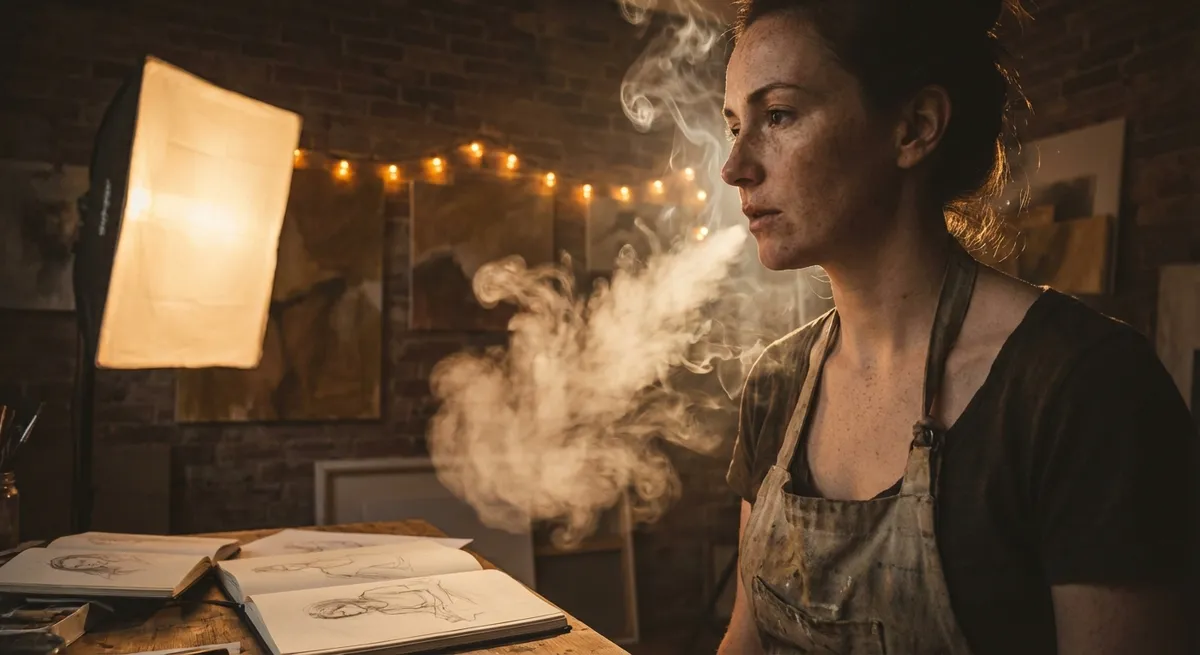
Light is the invisible chisel that sculpts every portrait you take. Two people can stand in the same spot with the same camera, but the one who understands light will always create the image that stops people mid-scroll. Whether you’re shooting with a DSLR, mirrorless camera, or your phone, mastering portrait lighting is less about owning fancy gear and more about learning to see.
This guide will walk you through essential portrait lighting patterns, practical camera settings, and creative exercises that will transform your portraits from “nice” to magnetic—one shot at a time.
Learn to See: Light as Your Main Subject
Before you think about lenses, poses, or locations, train yourself to notice what the light is doing to a face.
Look for three simple things:
Direction – Where is the light coming from? Above, below, side, front, behind?
Quality – Is it soft (gentle shadows, cloudy day, big window) or hard (sharp shadows, noon sun, bare bulb)?
Intensity – Is it bright and contrasty or soft and subtle? Can your camera handle the range?
Try this: stand someone near a window and slowly rotate them 360 degrees. Watch how their eyes, nose, and cheekbones transform. Notice when their eyes sparkle (catchlights), when their face looks slimmer, and when it suddenly looks flat or harsh. That little exercise is portrait lighting in its purest form—and it costs nothing.
Core Portrait Lighting Patterns (and How to Nail Them)
These classic lighting patterns are the alphabet of portrait lighting. Once you know them, you can mix, bend, and break them creatively.
1. Rembrandt Lighting: Dramatic but Natural
What it looks like: A small triangle of light on the shadowed cheek, just under the eye, opposite your light source.
How to set it up (window or softbox):
- Place your subject about 3–6 feet from a window or soft light.
- Position the light 45–60° to one side of the subject and slightly above eye level, angled down.
- Turn your subject’s face slightly away from the light until a small light triangle appears on the far cheek.
Camera starting settings (outdoor/bright indoors):
- Mode: Aperture Priority (A/Av) or Manual (M)
- Aperture: f/2.8–f/4 (for blurred background and crisp eyes)
- ISO: 100–400
- Shutter speed: Aim for 1/125s or faster (if in Aperture Priority, watch what the camera chooses)
Rembrandt lighting gives you mood and depth without looking artificial. It’s fantastic for character portraits and storytelling headshots.
2. Loop Lighting: Flattering and Versatile
What it looks like: A small shadow of the nose looping down towards the corner of the mouth, without touching the cheek shadow.
How to set it up:
- Place the light about 30–45° to the side of your subject and slightly above eye level.
- Turn your subject just slightly away from the light.
- Adjust the angle until the nose casts a soft, small shadow that doesn’t connect with the cheek.
Camera starting settings (indoors with window light):
- Aperture: f/2–f/2.8 (if your lens allows; great for portraits)
- ISO: 400–800
- Shutter: Around 1/125s or faster
- White balance: “Daylight” for window light, or use Auto and adjust later in editing
Loop lighting is popular because it flatters most face shapes and feels natural, like soft afternoon sunshine.
3. Butterfly Lighting: Glamour and Clean Beauty
What it looks like: A small shadow directly under the nose, shaped like a butterfly; even, flattering light on both cheeks.
How to set it up:
- Place the light directly in front of your subject and slightly above forehead level, angled downward.
- Keep the subject facing the camera straight on.
- Add a reflector or white surface below the chin (laptop, white foam board, or even a light-colored pillow) to soften shadows.
Camera starting settings (studio light or controlled environment):
- Aperture: f/4–f/8 (sharper, more detail in hair and makeup)
- ISO: 100–200
- Shutter: 1/125s (or at your camera’s flash sync speed if using strobes)
- If using flash: Start at 1/16–1/8 power and adjust based on histogram/preview
Butterfly lighting is often used in beauty and fashion because it smooths skin, enhances cheekbones, and brings elegance to the image.
4. Split Lighting: Bold and Cinematic
What it looks like: One side of the face is fully lit, the other is mostly in shadow, divided down the middle.
How to set it up:
- Place your light source 90° to the side of your subject—directly to their left or right.
- Keep the subject facing forward, then slightly adjust until the line between light and shadow runs down the center of the nose and lips.
- Use negative fill (a dark surface) on the shadow side to deepen contrast, or a reflector to gently recover detail.
Camera starting settings (dim environment / moody look):
- Aperture: f/1.8–f/2.8 (for shallow depth of field and more light)
- ISO: 800–1600 (modern cameras handle this well)
- Shutter: 1/125s or faster
- Consider spot metering on the lit side of the face to protect skin tones
Split lighting is dramatic. Use it for portraits where you want power, mystery, or a cinematic vibe.
Camera Settings That Keep You in Control
You don’t need to memorize every setting, but there are a few reliable starting points and habits that will save you from “almost great” portraits.
1. Choose Your Mode Wisely
- Beginner-friendly: Aperture Priority (A/Av)
- You choose aperture (depth of field), camera chooses shutter speed.
- Start at f/2.8–f/4 for portraits.
- More control: Manual Mode (M)
- Use when light is consistent (studio, indoors, same spot outdoors).
- Lock in aperture and shutter, then adjust ISO until the exposure looks right.
2. Lock in a Portrait-Friendly Shutter Speed
- Handheld portraits: 1/125s minimum (1/250s or faster if your subject is moving).
- With longer lenses (85mm, 135mm), go faster: aim for 1/(2×focal length) (e.g., 1/250s for 85mm).
3. Use ISO as a Tool, Not an Enemy
Don’t fear ISO—blurry photos are almost always worse than a little grain.
- Bright daylight: ISO 100–200
- Indoors by a window: ISO 400–800
- Dim interiors / evening: ISO 800–3200
You can reduce noise in post; you cannot fix motion blur or missed focus the same way.
4. Focus on the Eyes
- Use single-point AF and place the focus point on the nearest eye.
- If your subject moves, use continuous autofocus (AF-C/AI-Servo).
- On smartphones, tap the eye to lock focus if your camera app supports it.
Sharp eyes instantly elevate a portrait, even if other parts of the frame are soft.
Simple Gear, Big Results: Working with What You Have
You don’t need a truckload of gear to master portrait lighting. Start simple, then expand.
Great low-budget/lightweight tools:
- Window light: Nature’s softbox. North-facing or shaded windows are ideal.
- Reflector substitutes: White poster board, a bedsheet, a silver car windshield reflector.
- DIY diffuser: Sheer curtains, frosted shower curtain, or thin white fabric over harsh light (at a safe distance from heat).
- Prime lens (optional but powerful): A 50mm f/1.8 is usually affordable and great for portraits.
The goal isn’t to collect gear; it’s to shape light intentionally. Even with a phone and window, you can create professional-looking portraits once you understand direction, quality, and intensity.
Creative Lighting Exercises to Train Your Eye
Treat these like mini photo workouts. Each one builds a specific skill.
Exercise 1: The One-Window Portrait Series
Goal: Understand how direction changes a face.
- Place your subject next to a large window; turn off other lights.
Shoot four portraits:
- Window directly in front (flat/front light) - Window at 45° (loop light) - Window at 60° (Rembrandt) - Window at 90° (split light) 3. Keep settings similar: f/2.8–f/4, ISO 400–800, 1/125s+.
Compare the series:
- Which angle makes their eyes glow? - Which one slims their face? - Which one feels the most dramatic?
This trains you to move the light position (or your subject) instead of constantly changing camera settings.
Exercise 2: The “One Reflector, Two Moods” Challenge
Goal: Learn how fill light changes emotion.
- Use a white reflector (or poster board) and a window on one side.
Shoot your subject with Rembrandt or loop lighting:
- Without reflector on the shadow side (deeper, moodier). - With reflector filling the shadows (softer, friendlier). 3. Keep the same composition and settings.
Compare both images side by side: same person, same pose, but totally different emotional tone—just from adjusting fill light.
Exercise 3: Golden Hour vs. Cloudy Day
Goal: Adapt to natural light and use it intentionally.
On two different days:
- Golden hour (just after sunrise or before sunset):
- Try backlighting: put the sun behind your subject, expose for their face.
- Add a reflector in front if available to lift shadows.
- Cloudy day:
- Use the sky as a giant softbox; shoot from various angles.
- Look for subtle directional light by using building edges, doorways, or overhangs.
Notice how golden hour adds warmth, glow, and lens flare, while cloudy days offer soft, even light that’s forgiving for skin.
Exercise 4: Phone-Only Portrait Challenge
Goal: Prove to yourself that creativity > gear.
- Use your phone’s portrait mode (if available).
- Step close to a window or open door, turn off overhead lights.
Try three lighting styles:
- Window in front (soft, clean) - Window at 45° (subtle shadow, depth) - Window at 90° (dramatic) 4. Tap the subject’s eye to focus, and slightly underexpose if highlights blow out.
This builds confidence that you can craft beautiful portraits before ever buying more equipment.
Posing with Light in Mind
Posing doesn’t live separately from lighting—they work together. Small adjustments can dramatically change how light shapes your subject.
Try these micro-adjustments:
- Turn the face toward the light for a brighter, more open feel.
- Turn slightly away from the light for contour and slimming.
- Ask your subject to push their forehead slightly toward the camera and drop their chin a bit—this defines the jawline and catches light in the eyes.
- Watch the catchlights: if you can’t see them, adjust the angle of the face or your light until the eyes glow.
Aim to direct with simple, kind cues: “Turn your nose a tiny bit toward the window… perfect. Now lift your eyes to me.” Confidence and calm direction will make your subject relax—and that shows in the photos.
Building Your Own Lighting Style
Once you understand the basics, you can start bending the rules to develop your own visual voice.
Ask yourself:
- Do I love soft, dreamy light or bold, contrasty shadows?
- Am I drawn to natural light only, or do I want to mix in flash and LEDs?
- Do my favorite portraits feel cinematic, editorial, or intimate?
Spend time studying portraits you admire. Reverse-engineer them:
- Where is the light coming from?
- Is it hard or soft?
- How deep are the shadows?
- Are there one, two, or multiple light sources?
Then recreate the “feel” with whatever tools you have. Over time, you’ll stop guessing and start designing your light with intention.
Conclusion
Portrait lighting is less about technical perfection and more about sensitivity—seeing how light wraps, carves, and reveals a human face. Every window, lamp, and patch of shade becomes a potential studio once you know what you’re looking for.
Start simple: one light, one subject, a few classic patterns. Use the exercises to train your eye and your instincts. As you practice, your portraits will begin to carry something deeper: mood, story, and a sense of who the person really is.
Your camera doesn’t create the magic—you and the light do. Step into your next portrait session ready not just to take a picture, but to shape it.
Sources
- [Nikon: Portrait Lighting Basics](https://www.nikonusa.com/en/learn-and-explore/a/tips-and-techniques/portrait-lighting-basics.html) - Overview of classic portrait lighting patterns and setups
- [Canon USA: Portrait Photography Tips](https://www.usa.canon.com/about/blogs/learn/portrait-photography-tips) - Practical guidance on portrait settings, focus, and lighting considerations
- [B&H Explora: A Guide to Portrait Lighting Patterns](https://www.bhphotovideo.com/explora/photography/tips-and-solutions/portrait-lighting-patterns) - Detailed explanations and diagrams of Rembrandt, loop, split, and butterfly lighting
- [Adorama Learning Center: Natural Light Portrait Photography Tips](https://www.adorama.com/alc/natural-light-portrait-photography-tips) - Techniques for working with window light, golden hour, and reflectors
- [Harvard Digital Photography Course Materials](https://cs50.harvard.edu/extension/2020/fall/project/digital_photography/) - Foundational camera concepts including exposure, ISO, and shutter speed