
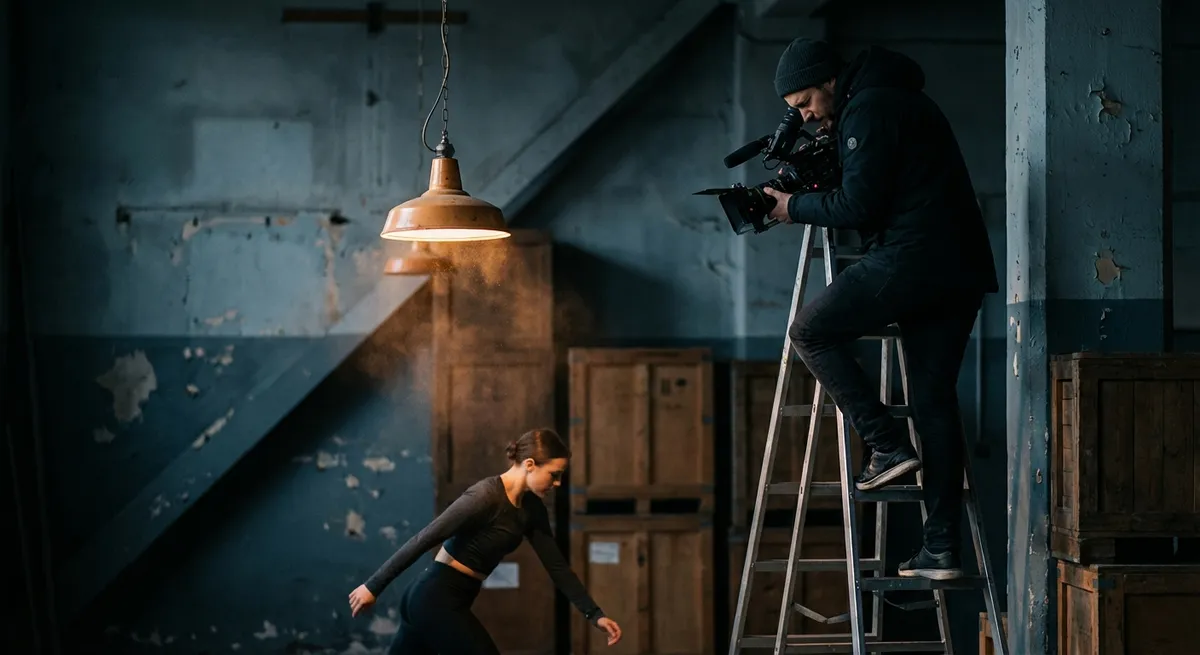
Every photo has a secret force field. Some images tug you in and won’t let go; others you glance at once and forget. That invisible pull is visual gravity—and it’s powered by composition. You don’t need a perfect sunset or a pro camera to create magnetic images. You need intention, a few practical tools, and the courage to experiment until your frame feels right.
This is your guide to shaping that feeling: how to arrange elements, choose settings, and move your feet so that your photos quietly demand attention—on a gallery wall, a phone screen, or a 24‑hour story.
Start With the Pull: Ask What You Want People to Feel
Before you think “rule of thirds,” think emotion. Composition is not just about where things go; it’s about what you want the viewer to feel in the first second.
Ask yourself before raising the camera:
- Do I want this to feel calm or tense?
- Intimate or distant?
- Minimal or chaotic?
- Grounded or dreamlike?
Those answers guide your choices:
- Calm → balanced shapes, horizontal lines, softer contrast, extra negative space.
- Tense → diagonals, tight crops, strong shadows, bold contrast.
- Intimate → get close, shoot at eye level or slightly below, use a wider aperture (f/1.8–f/2.8) to isolate a subject.
- Distant / documentary → step back, keep more context, use mid apertures (f/5.6–f/8) to show environment.
Creative exercise:
Open your camera in manual or aperture priority. Choose a single emotion—say quiet. Shoot 20 frames where every decision (angle, distance, depth of field) serves that feeling. Review later: which frames match the emotion most strongly, and what compositional choices show up again and again?
Lines, Shapes, and the Hidden Skeleton of Your Photo
Before we see faces or objects, our eyes read lines and shapes. Think of these as the skeleton of your photo—the structure that secretly directs the viewer.
Find the lines
Look for:
- Leading lines (roads, railings, paths, fences, shorelines) that guide the eye.
- Horizontal lines (horizons, tabletops, shelves) that feel calm and stable.
- Vertical lines (trees, buildings, poles) that feel strong and grounded.
- Diagonal lines (stairs, shadows, perspective) that feel dynamic and energetic.
- Curved lines (rivers, arches, arms) that feel flowing and elegant.
Try this approach:
Switch to black & white preview
If your camera or phone can show monochrome previews, use it. Stripping color helps you see line and shape more clearly.
Camera settings suggestion
- Mode: Aperture Priority (A/Av) - Aperture: f/5.6–f/8 for sharpness across most of the frame - ISO: 100–400 in daylight, 800–1600 in low light - Let the camera choose the shutter speed, but keep it above 1/125s for handheld shots.
Use lines intentionally
- Aim leading lines toward your subject, not out of the frame. - Avoid strong lines exiting corners unless you want the eye to leave quickly. - Tilt your camera a few degrees to turn a static horizontal into an energizing diagonal—then decide which mood suits the story best.
Creative exercise:
Pick one type of line (only horizontals, or only diagonals) and spend 30 minutes photographing nothing else. Limitations force you to notice structure in places you usually ignore.
Visual Weight: Why Some Things Shout and Others Whisper
Not all parts of a photo are equal. Some elements feel “heavier”—they grab more attention. Understanding visual weight helps you balance your frame like a sculptor with light and form.
What adds visual weight?
- Brightness: bright areas outweigh dark ones.
- Contrast: high‑contrast edges pull attention.
- Color: warm (red, orange, yellow) pulls more than cool (blue, green).
- Focus: sharp areas feel heavier than blurred ones.
- Size and placement: big, near the center = more dominant; small, near edges = less.
- Faces & eyes: the human brain is hard‑wired to seek them first.
Use this to your advantage:
- If your subject is bright, put it against a darker background (or vice versa).
- Use a wider aperture (f/1.8–f/3.5) to keep your subject sharp and background blurred, especially for portraits or details.
- Reduce distractions: step sideways, lower your angle, or zoom in to push clutter out of the frame.
- If the background is busy and unavoidable, shoot at a longer focal length (e.g., 50–85mm on full‑frame, 35–50mm on APS‑C, 26–52mm on many phones’ telephoto modes) and a wide aperture to compress and soften it.
Quick camera setup for subject emphasis:
- Mode: Aperture Priority
- Aperture: f/1.8–f/2.8 (prime lens) or your lens’s widest
- ISO: 100–400 in good light, 800–1600 indoors
- Enable single‑point autofocus and place the AF point on the subject’s eye (for people) or the key detail.
Creative exercise:
Photograph one subject in three ways:
Subject brighter than background
Subject darker than background
Subject same brightness, but surrounded by blur
Compare how quickly your eye lands on the subject in each shot.
Rhythm and Repetition: Turn Ordinary Scenes into Patterns
Our eyes love patterns. Repetition turns mundane objects—windows, chairs, bottles, shadows—into graphic, almost musical images. But the magic happens when you break the pattern.
Look for:
- Rows of windows with one curtain open.
- A line of similar cars with one standout color.
- Repeated pillars, trees, or streetlights.
- People on stairs or escalators creating step‑like rhythms.
How to compose patterns effectively:
- Fill the frame: zoom or move closer so the pattern stretches edge to edge.
- Shoot from above or below: change perspective to turn a simple thing (like chairs) into abstract shapes.
- Break the rhythm on purpose: place a contrasting element (color, size, direction) where the viewer doesn’t expect it.
Camera tips:
- Aperture: f/5.6–f/11 for repeated details in focus.
- Use a lower ISO (100–200) for crisp textures and minimal noise.
- Consider a higher vantage point—hold your camera overhead or use stairs, a bench, or a balcony.
Creative exercise:
Choose one everyday location—a parking lot, grocery aisle, or bus stop. Spend 20 minutes hunting only for patterns. Then, for each pattern you find, wait for someone or something to interrupt it. That’s your shot.
Negative Space: Let Silence Do Some of the Talking
Negative space is the empty or simple area around your subject—sky, blank wall, calm water, soft shadow. Used well, it becomes a character of its own: breathing room, mood, and emphasis all at once.
Why it works:
- It simplifies the story: one subject, one feeling.
- It directs attention immediately.
- It plays beautifully on social media feeds cluttered with visual noise.
How to build with negative space:
- Place your subject off‑center, leaving a large area empty.
- Keep the horizon low or high instead of centered to create expanses of sky or ground.
- Look for uncluttered backgrounds: painted walls, backlit sheer curtains, quiet stretches of beach.
Camera & exposure tips:
- For bright, empty skies, use exposure compensation (+0.3 to +1.0 EV) to keep the subject from becoming a silhouette—unless that’s the look you want.
- For clean silhouettes, meter for the bright background and let your subject fall dark (spot metering or negative exposure compensation, around –1.0 EV).
Creative exercise:
Spend one outing shooting only with the rule: “My subject must occupy less than 25% of the frame.” Let emptiness do the storytelling. Notice how your mood changes versus tightly framed shots.
Depth and Layers: Make Flat Screens Feel Three‑Dimensional
Screens are flat; life is not. Composition is how you bring that depth back. The secret: foreground, middle ground, background—three layers that create a sense of space and immersion.
How to build layered images:
- Foreground: leaves, rails, doors, reflections, silhouettes, out‑of‑focus shapes close to the lens.
- Middle ground: your main subject.
- Background: environment that adds context (buildings, landscape, room details, distant lights).
Try this setup:
- Aperture: f/4–f/5.6 to keep the subject sharp while softly hinting at foreground and background.
- Focus: on the subject in the middle ground.
- Distance: get closer to something in the foreground—even if it becomes a blur of color or shape.
Practical tricks:
- Shoot through windows, plants, or doorframes to create a “frame within a frame.”
- Use reflections—puddles, mirrors, glass—as an extra layer of reality.
- For night scenes, place city lights in the background and an object or person mid‑frame for a cinematic feel.
Creative exercise:
Choose any subject (a friend, a coffee cup, a bike). Shoot it three times:
- No layers: just the subject against a wall.
- Add background context.
- Add both a foreground element and a meaningful background.
Notice how your story evolves with each layer you add.
Movement and Timing: Compose for What’s About to Happen
Composition isn’t frozen; it anticipates motion. A powerful frame often captures the moment just before or just after something happens—when tension is highest.
Key ideas:
- Look for direction: where is your subject moving or looking? Leave more empty space in front of that direction (called “lead room”).
- Shoot in bursts: use continuous shooting to capture subtle changes in gesture or expression.
- Pre‑focus: if someone will walk through a frame, focus on the spot they’ll pass, then wait.
Shutter & settings tips:
- For sharp motion (running, jumping, streets):
- Shutter: 1/500s or faster.
- Mode: Shutter Priority (S/Tv) or Manual.
- Auto ISO can help maintain exposure as you prioritize speed.
- For motion blur:
- Shutter: 1/10–1/30s for light trails or subtle blur.
- Pan with your subject—move your camera smoothly in the direction of movement.
- Use image stabilization or brace against something if possible.
Creative exercise:
Choose one moving subject: trains, cyclists, kids playing, even cars at an intersection.
Take:
- 10 frames freezing motion at 1/500s or faster.
- 10 frames at 1/15–1/30s, panning to blur the background.
Compare how composition interacts with motion in each set and which feels more alive.
Phone Photography: Pocket‑Sized Composition Power
You don’t need a dedicated camera to apply any of this. Your phone already has powerful tools; composition is what turns them into art.
Quick phone tips:
- Turn on grid lines: this helps with balance, horizons, and alignment.
- Use your feet before zoom: digital zoom can reduce quality; step closer when possible.
- Tap to expose and focus: tap on your subject, then slide exposure up or down to keep highlights from blowing out.
- Try different lenses: wide for drama and context, telephoto (2x–3x) for portraits and compression, ultra‑wide for strong leading lines.
Composition‑friendly phone settings:
- Use “Portrait” mode for shallow depth of field, but pay attention to edges where software blur can look unnatural; adjust your angle to help the effect.
- For low‑light scenes, use “Night” mode and hold still; compose carefully first since longer exposures amplify small movements and bright spots.
Creative exercise:
Pick one everyday object (keys, coffee mug, book, plant). Make a mini‑series of 5–10 images using only your phone, each one using a different compositional idea from this article: negative space, pattern, leading lines, layers, motion, etc. Post them as a carousel to tell a tiny visual story.
Conclusion
Composition isn’t a checklist; it’s choreography. Lines lead, shapes anchor, space breathes, light whispers or shouts—and you’re the one arranging the dance. The more you practice seeing visual weight, patterns, layers, and movement, the more your photos start to feel like how the moment felt.
Don’t wait for a perfect location or a new lens. Start where you are: your street, your room, your commute. Pick one idea—negative space, lines, layers—and devote a day or a week to it. Your feed, portfolio, and personal eye will all sharpen together.
Every frame is a fresh chance to create visual gravity. The world is already full of potential compositions. All that’s missing is how you choose to place them.
Sources
- [Cambridge in Colour – Introduction to Composition](https://www.cambridgeincolour.com/tutorials/camera-composition.htm) - In‑depth overview of core composition principles like balance, symmetry, and visual weight
- [Nikon USA – Understanding Depth of Field](https://www.nikonusa.com/en/learn-and-explore/a/tips-and-techniques/understanding-depth-of-field.html) - Explains how aperture and distance affect depth and subject separation
- [Canon USA – How Shutter Speed Affects Motion in Photos](https://www.usa.canon.com/support/photography-tips/how-shutter-speed-affects-motion) - Practical guidance on freezing and blurring motion for more dynamic compositions
- [Harvard University – The Science of Vision](https://sitn.hms.harvard.edu/flash/2016/seeing-is-believing-vision-science/) - Background on how our eyes and brain perceive contrast, edges, and patterns
- [National Geographic – Photo Tips: Framing & Perspective](https://www.nationalgeographic.com/photography/article/photo-tips-framing-perspective) - Real‑world examples of using framing, layers, and perspective for storytelling images